


About pune
Pune, located in Maharashtra, is a flourishing metropolis and one of the most liveable cities in India. The city is renowned for its prestigious educational institutions and is also known as the Oxford of the East. Pune successfully blends history and modernity, with a touch of colonial-era grandeur. It preserves the roots of Maratha culture in its traditions, monuments, and daily life, making it Maharashtra's cultural capital. You can plan an enjoyable trip to Pune with your family, friends, or colleagues, selecting the sightseeing spots and activities that suit your preferences and interests.
Top 10 places
1
2
3
4
5
6
7
8
9
10
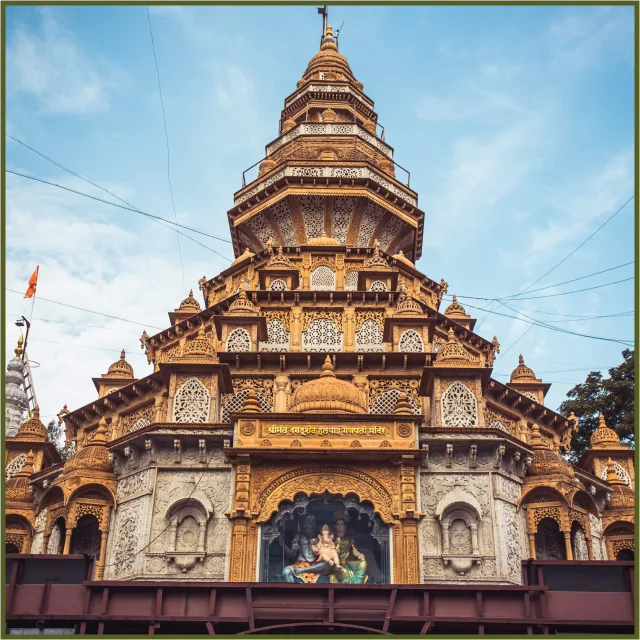
The Dagdusheth Temple, also known as the Shreemant Dagdusheth Halwai Ganpati Temple, is a famous Hindu temple located in Pune, Maharashtra. This temple is dedicated to Lord Ganesha, who is worshipped for his ability to remove obstacles and bestow blessings. As one of Maharashtra's most beloved Ganesh shrines, it holds a special place in the hearts of its faithful visitors.
The temple was founded on February 19, 1893, by Shreemant Dagdusheth Halwai and his wife, Lakshmibai. Halwai, who was a famous wrestler & sweet vendor by profession, was a devout follower of Lord Ganesha. The temple is dedicated to their son, who passed away. It was one of the first to participate in a public celebration of Ganesh Chaturthi initiated by Indian nationalist leader Lokmanya Tilak. Today, it is one of the five manache Ganpatis of Pune and attracts a large number of devotees every day, especially during the 10-day Ganesh Chaturthi festival. It stands as a testament to faith, devotion, and reverence.
Dagdusheth Temple is known for its stunning idol of Lord Ganesha, which is 2.2 m tall and 1.8 m wide. The temple is particularly lively during Ganesh Chaturthi, with colorful decorations, music, and processions. The design of the temple blends traditional and contemporary elements, featuring intricate carvings, vibrant frescoes, and beautiful ornaments. Facilities include Puja and aarti, donations and annadan.
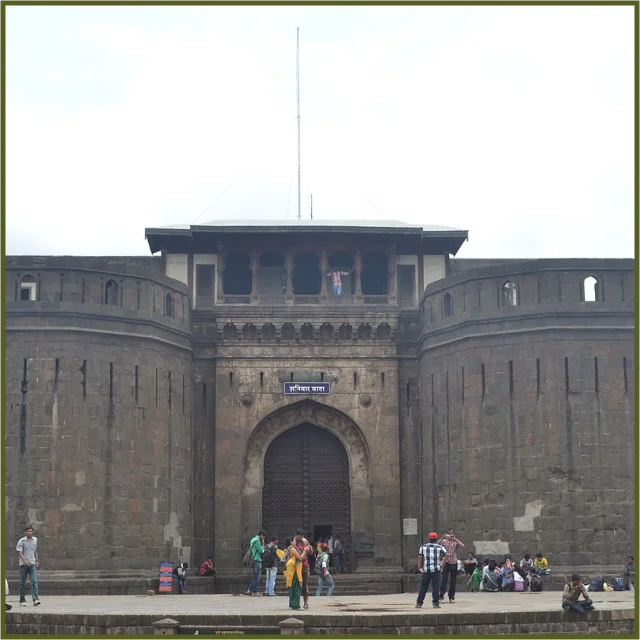
Shaniwarwada is a 286-year-old grand mansion located in Pune. Built by Peshwa Bajirao I, it was the residence of the Peshwas and covers 625 acres. Although most of the Wada was destroyed by fire in 1828, it still features beautiful architecture, including five gates, nine bastions, and fountains. The light and sound show held every evening narrates the history of the Peshwas and the Maratha Empire.
Bajirao I, Peshwa to Maratha ruler Chhatrapati Sahu, initiated the 18th-century construction of Shaniwar Wada, initially planned as a 7-story stone marvel. Public resistance emerged due to objections about the king's exclusive authority over stone palaces. Responding to the outcry, construction changed to brick for the remaining floors. Shaniwar Wada later faced a British Artillery attack, leading to the collapse of six stories, leaving only the enduring stone base. In 1828, a week-long mysterious fire razed the palace, leaving behind granite ramparts and resilient teak gateways. A dark episode unfolded in 1773 when the fifth Peshwa, Narayanrao, was murdered, and legends persist of his ghost's cries for help on full moon nights.
The optimal period for a Shaniwar Wada visit falls between October and February, offering delightful weather that is ideal for leisurely exploration of the palace grounds. Explore in the evening hours to experience the captivating light and sound show experience.
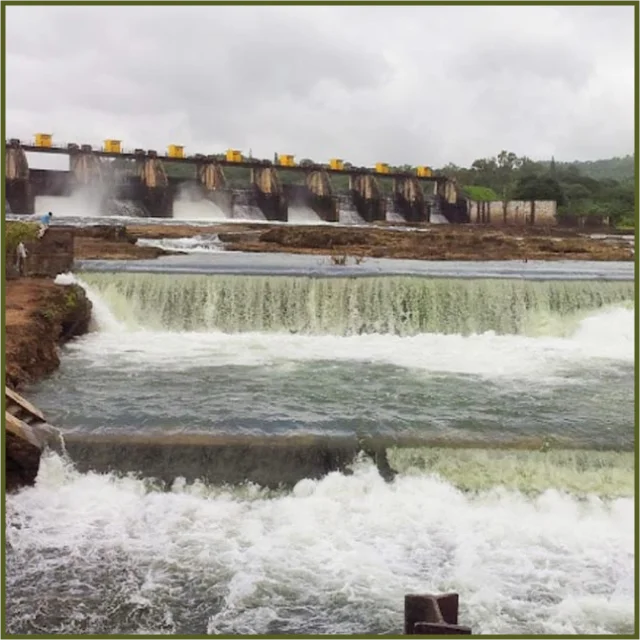
Khadakwasla Dam, a celebrated Pune attraction, spans the vital River Mutha, supplying water to the city. Creating Khadakwasla Lake, it's a favored getaway and picnic spot close to Pune City, with popular cycling routes. Monsoons enhance its allure, drawing visitors to witness the landscape's transformation. Extending 1.6 kilometers over the River Mutha, the dam is a water management hub with a vast reservoir area of 22,000 square kilometers, standing over 31 meters tall on the sturdy Mutha riverbed, attracting both enthusiasts and those seeking scenic exploration.
Constructed in the 19th century, Khadakwasla Dam in Pune was a response to East Pune's severe drought, masterminded by Captain Fife Re of the British army. The project, initiated in 1869 and overseen by Captain Fife Re, culminated in the completion of the dam by 1879. Initially named Fife Lake in honor of the planner, it retained this title until 1947. Unfortunately, the original dam succumbed to floods in 1961, prompting its swift reconstruction to address the persisting water crisis.
Experience the best of Khadakwasla Dam and Chowpatty during the lush monsoon (July–August) or the pleasant winter months (November–February) when vibrant greenery surrounds the landscape. You can plan a picnic with your family and camping during the weekends too. Evenings offer a picturesque view, and weekdays provide a serene, solitary atmosphere for a tranquil visit.
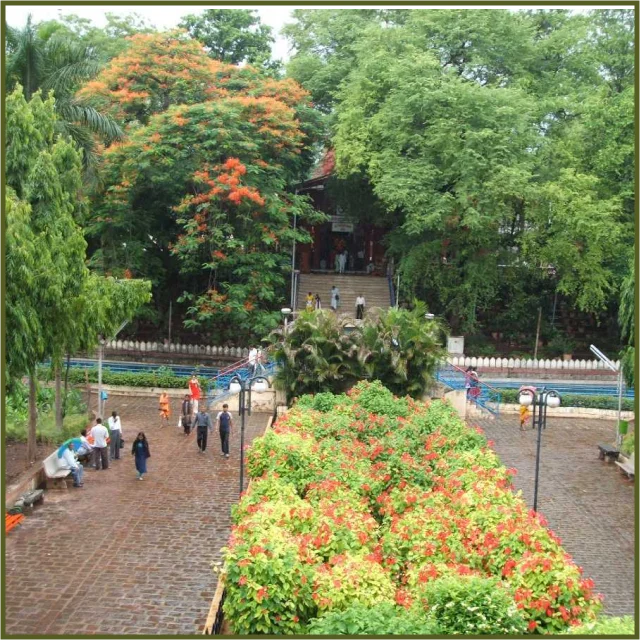
SarasBaug, a prominent Pune attraction, emerged from a dried-up lake at Parvati's foothills, evolving into a 25-acre park with a central Lord Ganesh temple, known as Talyatla Ganpati. Rooted in Peshwa history, the park boasts well-maintained lawns and pathways, providing a serene ambiance. Visitors can explore while maintaining cleanliness and delve into the temple's historical significance. Nestled at Parvati's foothills, Saras Baug offers a tranquil retreat for locals, complemented by a small museum dedicated to Lord Ganesha, enhancing its cultural allure.
Built in the 20th century around a mid-18th-century Ganesh Temple, Saras Baug in Pune originated around a lake. Nanasaheb Peshwe envisioned this Ganesh Temple, with construction spanning from 1750 to 1784. From the 18th to the 19th century, the temple served as a strategic meeting point for Marathas, who conducted military discussions against the British and Nizams. Boats, navigated by Native Africans for privacy, carried Marathas to the temple in the middle of the lake for confidential talks.
The best time to visit Saras Baug is from October to February. The prominence of ‘sarus’ cranes in the garden is the primary reason why the place is called today.Previously housing a zoo called Peshwe Park, the species have been relocated to Rajeev Gandhi Zoological Park in Katraj. Saras Baug offers delightful picnic spots, making it an ideal destination for families and loved ones to enjoy.
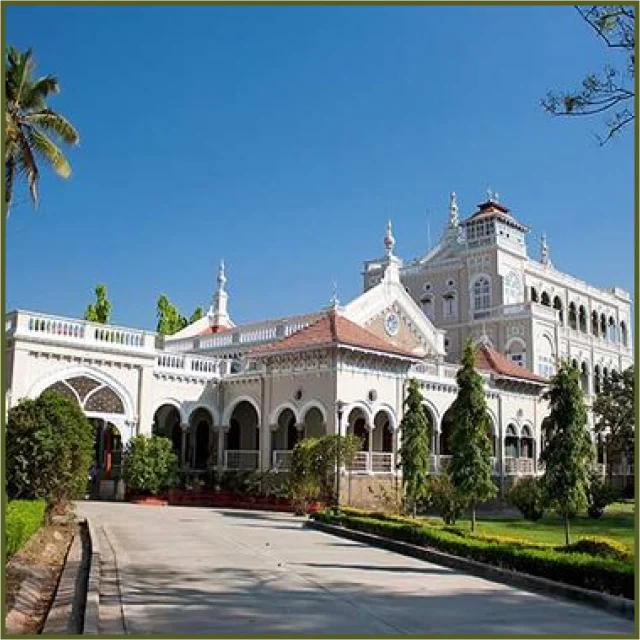
Aga Khan Palace, a popular Pune tourist spot, was constructed in 1892 by Sultan Mohammad Shah Aga Khan to aid famine-affected people in Maharashtra. Spanning 1756 sq. meters, the palace took 5 years to complete and holds immense historical significance in India's independence movement. Serving as a prison for Mahatma Gandhi, Kasturba Gandhi, Sarojini Naidu, and Mahadev Desai, it is both architecturally excellent and historically important. Now the headquarters of the Gandhi National Memorial Society, the palace spans 19 acres, and khadi production remains a key activity on the premises.
Aga Khan Palace, deeply entwined with Mahatma Gandhi's history, housed him, his wife Kasturba, and secretary Mahadev Desai during their internment from 1942 to 1944. Tragically, both Kasturba and Mahadev Desai passed away during this period, and their Samadhis are located within the palace. Donated by Aga Khan in 1969 to honor Gandhi, the palace received support from Prime Minister Indira Gandhi in 1974, with yearly maintenance funds increasing to INR 1,000,000. Memorials for Mahatma and Kasturba Gandhi further enrich the historical significance of this site.
Aga Khan Palace enchants with vast lawns, five halls adorned with Italian arches, and two floors spanning 1080 sq. meters and 445 sq. meters. Encircled by a 2.5-meter corridor, the palace hosts annual public functions, including Martyr's Day, Maha Shivratri, Mother's Day (Kasturba Gandhi's Death anniversary), Independence Day, Republic Day, and Mahatma Gandhi's birth anniversary, organized by the Gandhi Memorial Society.
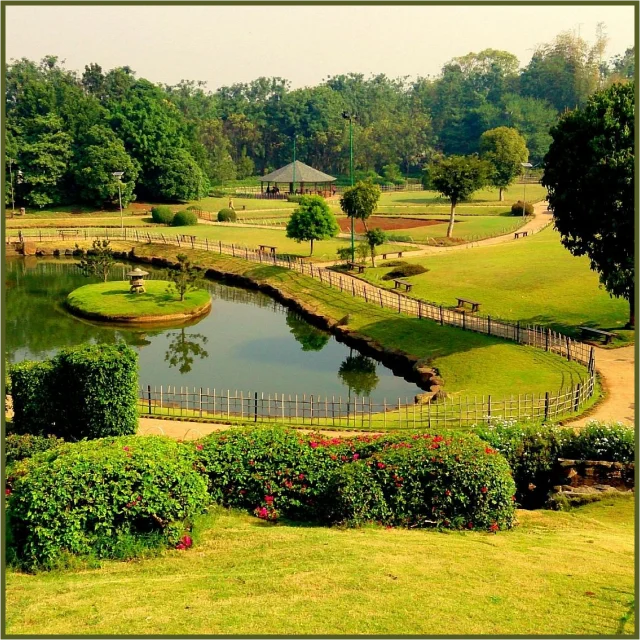
Pune's Japanese Garden, the largest outside Japan, named Pune Okayama Friendship Garden or Pu. La. Deshpande Udyan, celebrates Marathi writer Pu La Deshpande. Situated on Sinhagad Road, it harmoniously combines nature and concrete with canals, ponds, waterfalls, lush greenery, pergolas, vibrant flowers, and artificial hills. Reflecting Japanese Yin and Yang theory, it offers a serene ambiance, inviting visitors for a calming stroll or exploration of its diverse flora.
In 1998, Pune's Mayor Dattatreya Gaikwad initiated a "sister city" bond with Berman, leading to eight global cities, including Okayama in Japan, forming similar ties with Pune. The Okayama Friendship Garden, also named Pu. La. Deshpande Udayan, symbolizes the Indo-Japanese friendship, drawing inspiration from Okayama's renowned Korakuen Garden. Created under sister city initiatives, the garden pays homage to Marathi writer Purushottam Laxman Deshpande, known as Pu La Deshpande, reflecting traditional Japanese culture's emphasis on gardens for peace, meditation, and spiritual practices to foster a peaceful and cultural relationship between the two countries.
Amid lush greenery, Pune's Okayama Friendship Garden showcases lion statues at the entrance embodying Yin and Yang forces. Inside, Japanese garden elements, including water features and stone lanterns, complement diverse flora. The unique touch of "Kasan" mountains crafted with wood, stones, and ceramic enhances the garden's overall beauty; it also served as a filming location for Salman Khan's "Bodyguard" movie.
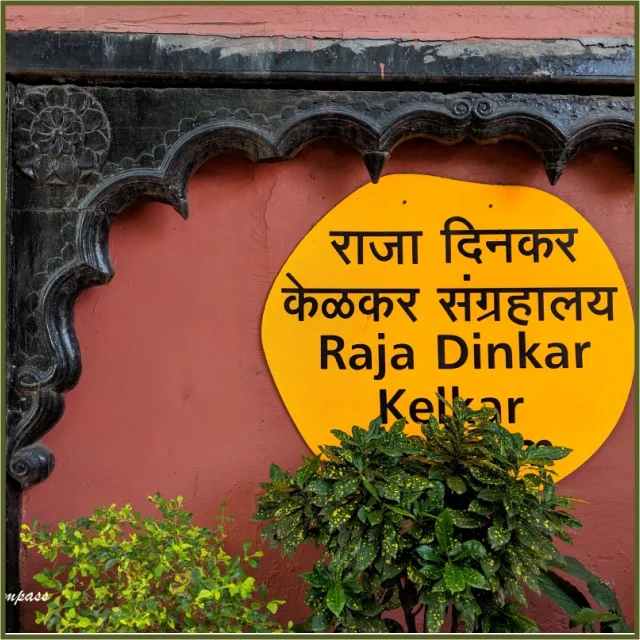
Situated on Bajirao Road in Shukrawar Peth, the Raja Dinkar Museum, established in 1962 by Baba Dinkar Kelkar, pays tribute to his late son. Managed by the Department of Archaeology, Government of Maharashtra, this three-story museum showcases a vast collection of 15,000 items, including Mughal lamps, musical instruments, Ganpati's guns, intricate carvings, pottery, and paintings depicting scenes from the Ramayana. The extensive assortment, gathered over 40 years, features valuables from the 17th century Mughal and Maratha empires, offering a rich cultural experience for visitors.
In 1962, museum management transitioned to the government, unveiling an initial collection of 20,000 exhibits, now narrowed to 15,000 on display. Notable features include miniature statues of Lord Ganesha, Lord Shiva, and Goddess Parvati. The highlight remains the vibrant replica of Mastani Mahal, built in 1734, exuding grandeur with elaborate chandeliers, artistic decor, gorgeous paintings, and a regal ambiance akin to a royal palace.
A notable attraction at Raja Dinkar Kelkar Museum is the replica of Mastani Mahal, constructed in 1734. Adorned with opulent decor, grand chandeliers, and artistic paintings, the room mirrors the regal ambiance of a palace. Additionally, the museum houses Research and Storage facilities, along with the Institute of Musicology and Fine Arts within its premises.
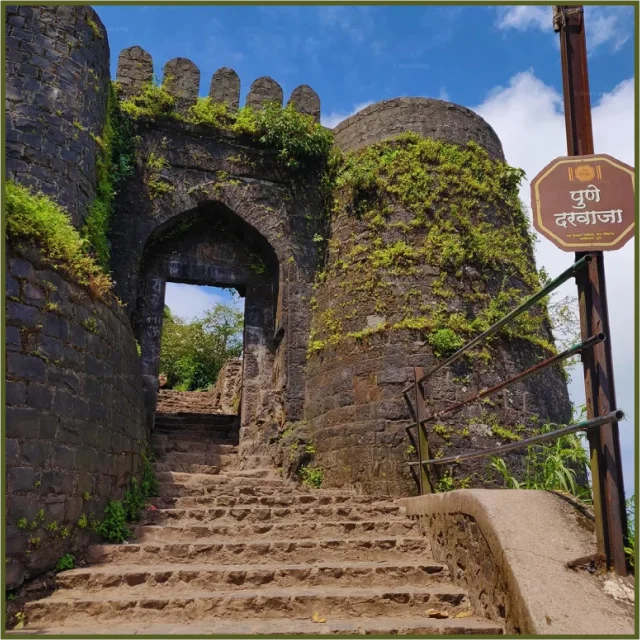
Situated in the Sahyadri Mountains, Sinhagad Fort, formerly Kondhana, is historically significant, notably for the 1670 Battle of Sinhagad. Meaning Lion's Fort, it stands over 750 meters, strategically placed among Maratha forts. Popular among trekkers, photographers, and nature enthusiasts, the fort offers a quick getaway, once visited by figures like Bal Gangadhar Tilak and Mahatma Gandhi. Despite restrictions, embracing the dilapidated yet striking structure and scenic surroundings ensures a memorable experience.
The Kaundinyeshwar Temple carvings suggest Sinhagad Fort's age of around 2000 years, also known as Kondhana Killa due to sage Kaundinya's meditation. Initially ruled by Koli king Nag Naik until 1328, it fell to Turkish invader Muhammad bin Tughlaq. Shahaji, a Maratha commander, later managed it, and Shivaji secured control in 1647 but returned it for his father's release. Shivaji recaptured it in 1656, enduring battles with the Mughals, including the pivotal 1670 battle led by Tanaji Mulasare. Maratha-Mughal conflicts persisted until the British claimed the fort in 1818.
Perched atop the Sahyadri mountains on a plateau with steep natural defenses, Sinhagad Fort sits at an elevation of over 1300 meters, around 750 meters above the mountain's base. The well-preserved main ramparts and ancient stone stairways lead to the Pune Darwaza (northeast) and Kalyan Darwaza (southeast), the fort's imposing entrance gates. Within the complex, notable features include the Kaundinyeshwar Temple, the tomb of Chhatrapati Rajaram, and the memorial of Tanaji Malusare, along with rock caves and other historic structures.
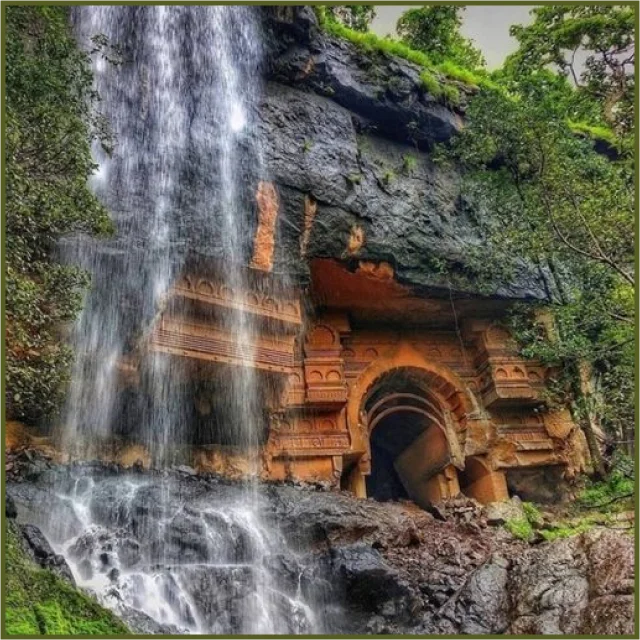
Karla Caves, near Lonavala, stand as ancient Buddhist rock-cut sanctuaries, renowned for hosting one of India's largest Chaityas (prayer halls with a stupa). Formerly known as Veluraka, the site boasts a colossal 15-meter pillar and the Ekvira Temple dedicated to Goddess Ekveera. Housing a Buddhist monastery dating back to the 2nd century BC, Karla Caves also reveal an ancient trade route leading from the Arabian Sea into the Deccan. Accessible after climbing approximately 150 stairs, these caves offer a captivating journey into history.
Karla Caves, built over two distinct periods, witnessed the first phase from 2nd century BC to the 2nd century AD and the second from the 5th century AD to the 10th century. The cohesive design of the entire cave, except for three excavations in the Mahayana phase, reflects a collective effort supported by diverse contributors—merchants, monks, nuns, and even a Marathi prince. Inscriptions throughout mention individuals from various regions like Vejamti, Sopara, Umehanakata, and Dhenukakata. Notably, inscriptions reveal land donations to Velluraka Samgha, connecting the ancient name 'Veluraka' to these generous acts.
Karla Caves boast India's grandest Chaityagriha, measuring 37.87 m deep, 13.87 m wide, and 14.02 m high. Adorned with intricate carvings, rock-cut columns lead to a stunning semi-circular ceiling supported by wooden arches. The stupa features a cylindrical drum, cubical 'harmika,' and a seven-step square-base pyramid. Among the 16 rock-cut excavations, 8 are Chaityagrihas, featuring sculptures of males, females, and animals, including a preaching Buddha. Ashokan pillar-inspired pillars with elephant motifs and a dedicated temple to Goddess Ekvira embellish the cave entrance.
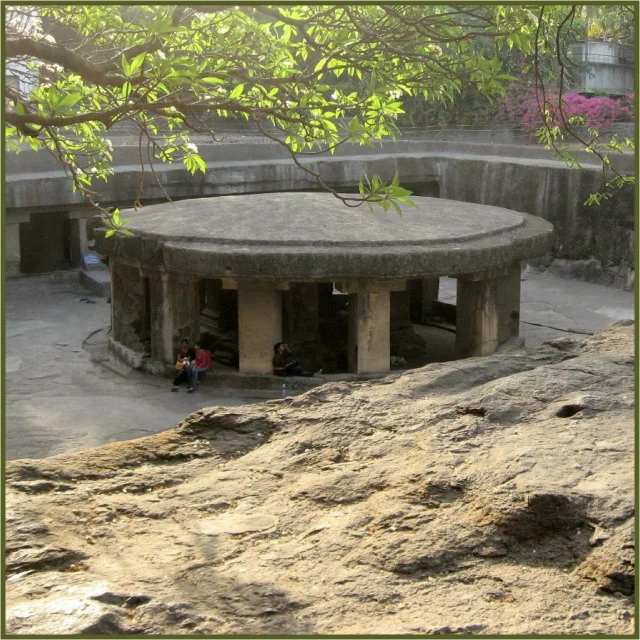
Located on Jangli Maharaj Road in Pune, the Pataleshwar Cave Temple honors Lord Pataleshwar, a form of Lord Shiva. Carved from a single rock, it stands in the city's heart, drawing devotees daily. With elaborate carvings and miniature paintings, it's dedicated to Lord Shiva, Nandi, and other deities like Lord Ram, Sita, Lakshmi, Lakshman, and Ganesh. Inspired by Elephanta Caves, the temple lacks a real entrance and is maintained by the Archaeological Survey of India. Legend suggests the Pandavas built it swiftly during their exile.
Also recognized as Panchaleshwar or Bhamburde, the temple is thought to date back to the Rashtrakuta Period, between the 8th and 9th centuries AD, carved from a monolithic excavation. Inspired by the Elephanta Caves, its architectural patterns closely resemble those of the Ellora Caves near Aurangabad.
The Pataleshwar Temple, carved from a colossal basalt rock, features massive pillars supporting the roof, housing a prominent Shivalingam and a Nandi statue. Inside, a stunning rotunda roof and finely crafted pillars lead to the Nandi Mandapa, dedicated to Lord Shiva's bull. The central section holds a small cave with the Shivalinga, surrounded by smaller caves containing idols like Lord Ram, Sita, Lakshman, Lakshmi, and Hanuman. The temple also hosts a tiny museum showcasing a single grain of rice inscribed with 5000 letters, earning it a place in the Guinness Book of Records.
Pune darshan
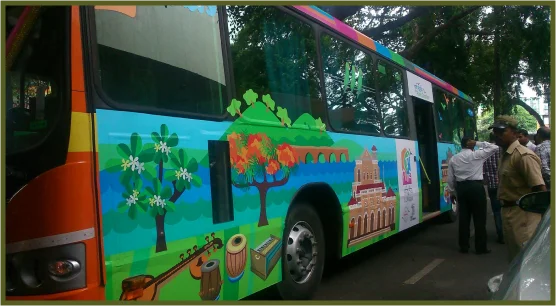
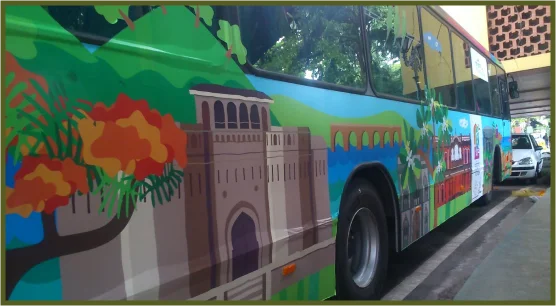
Pune is a popular tourist destination, known for its scenic beauty and historical landmarks. To enhance the travel experience of tourists and promote the cultural heritage of the city, Pune Mahanagar Parivahan Mahamandal Ltd. (PMPML) provides a special bus service called 'Pune Darshan'. The service covers 14 tourist spots over a distance of 25 km, and includes an air-conditioned bus. A tourist guide accompanies the passengers on the bus and at each destination, providing information about each location.
The Pune Darshan bus service has been very well received by tourists, as it provides a comprehensive tour of the city with an experienced tour guide. With this initiative, PMPML aims to promote and strengthen the cultural heritage of Pune.
contact
Have any questions? Don’t hesitate to contact us!

Explore pune our way!


© Copyrights 2023. All Rights Reserved GhumoPune